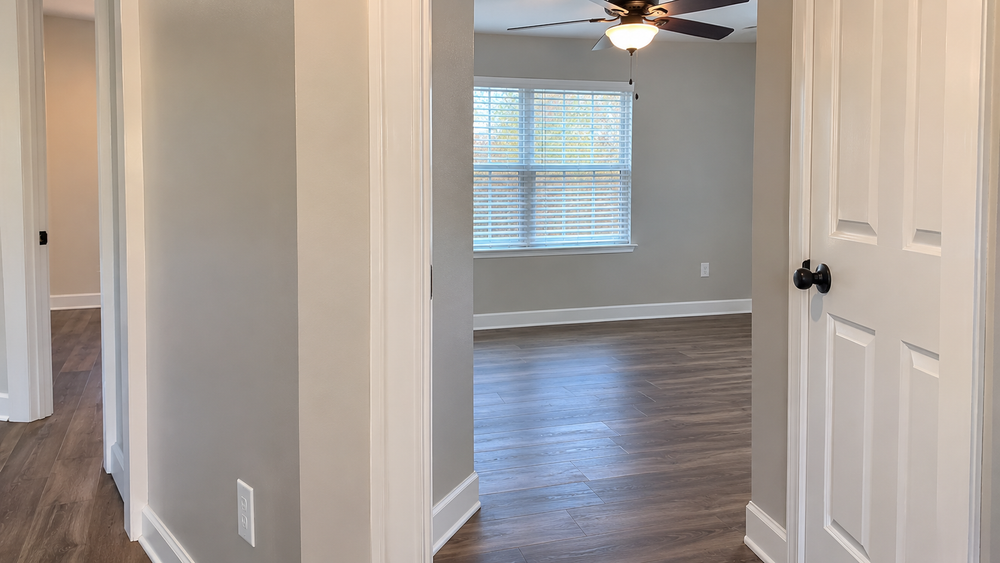
The new cabinets are installed.
The walls have been painted.
The contractor has packed up the equipment, and the renovation you've been planning for months is finally finished.
Everything looks different.
Then, the next morning, you run your finger across a windowsill.
There's dust.
You wipe it away, only to notice another thin layer on the nearby countertop.
It doesn't necessarily mean the work was poorly completed.
It means there's an important difference between finishing a renovation and preparing a room for everyday use.
For homeowners throughout Marietta, Kennesaw, Acworth, and Cobb County, understanding that difference can help prevent frustration after an otherwise successful home improvement project.
Construction Dust Doesn't Stay Where the Work Happened
Imagine replacing kitchen cabinets in an occupied home.
The work itself may be concentrated in one room, but people still need to walk through nearby hallways.
Doors open and close.
Materials are carried in and out.
Air moves through the house.
Depending on the project and containment measures, fine particles can settle on surfaces beyond the immediate work area.
You may notice residue along the edges of newly installed cabinets, on nearby windowsills, or on flooring just outside the kitchen.
Sometimes, surfaces look clean until afternoon light hits them at a particular angle.
That's when the remaining dust becomes easier to see.
The important question isn't simply whether the floor has been swept.
It's whether the area is ready to return to normal household use.
The Problem with Cleaning Too Soon
There's a temptation to start cleaning as soon as the major construction work appears finished.
But timing matters.
If contractors are still sanding, drilling, cutting materials, or applying finishes, detailed cleaning may need to be repeated.
Wet paint, uncured sealants, and newly treated surfaces also require appropriate care.
Before scheduling a final cleaning, confirm that the active work is complete, required curing periods have been observed, and the contractor has removed construction materials and equipment.
Ask whether any specialized cleanup is required.
Certain projects, particularly those involving older painted surfaces, possible asbestos-containing materials, mold, or other hazardous substances, require qualified professionals and appropriate procedures.
Ordinary residential or post-construction cleaning should not be treated as a substitute for hazardous-material remediation.
Once the work area has been safely released for normal cleaning, attention can turn to the remaining dust and surface residue.
Why the Windows Matter
Renovation projects can leave marks on glass and window frames even when the windows themselves haven't been replaced.
Dust may collect along accessible tracks and sills.
Fingerprints can remain on the glass.
Nearby trim may accumulate fine surface residue.
Window cleaning is one of the services that can be particularly useful after a renovation, but the technique must suit the glass, coatings, frames, and surrounding materials.
Avoid aggressive scraping or abrasive methods that could damage new finishes.
The same principle applies to countertops, cabinets, flooring, and fixtures.
New doesn't always mean durable against every cleaning product.
A Walk Through a Recently Renovated Room
Instead of trying to clean everything at once, consider the room in sections.
Start with the surfaces that collect dust.
Look at accessible shelves, cabinet exteriors, windowsills, and trim. Fine residue may require appropriate dust-removal equipment and techniques rather than ordinary dry wiping.
Move to the details people touch.
Cabinet handles, doors, light switches, and countertops may have been handled repeatedly during installation.
Check which materials were installed and follow the manufacturer's cleaning guidance.
Finish with the floors.
Debris and abrasive particles should be removed using methods suitable for the flooring before wet cleaning begins.
The goal is to prevent grit from being dragged across newly finished surfaces.
Depending on the room, its condition, and the construction work performed, different areas may need different levels of attention.
That is why a proper post-construction cleaning plan should begin with an assessment of the actual space.
When Professional Post-Construction Cleaning Makes Sense
Post-construction cleaning is different from the regular maintenance of an occupied home.
A standard cleaning appointment may focus on familiar household surfaces, bathrooms, kitchens, and floors.
After renovation, the main concern may be fine residual dust, window cleaning, and surfaces that haven't been accessible during the project.
At Orderly Spaces Home, Post-Construction Cleaning is one of the services we offer throughout Kennesaw, Marietta, and surrounding Cobb County communities.
The service focuses on dust removal, window cleaning, and appropriate surface care after building or renovation work.
Because every project is different, the specific tasks should be confirmed when arranging an estimate.
A renovated bedroom will not have the same cleaning requirements as an entire remodeled kitchen.
Likewise, a home that remained occupied during construction may require a different approach from an empty property.
The Moment a Renovation Finally Feels Finished
There's a moment after a home improvement project when the space stops feeling like a construction site.
The tools are gone.
The protective coverings have been removed.
The floor is clean, the windows are clear, and the room can be used again.
You no longer have to walk around boxes of materials or avoid touching newly installed surfaces.
Instead, you begin doing ordinary things.
Preparing dinner.
Sitting in your favorite chair.
Putting dishes into a cabinet that finally opens the way it should.
Those moments are what the renovation was really for.
At Orderly Spaces Home, we believe the final stage of a home improvement project deserves the same thoughtful attention as the work that came before it.
Because the project isn't truly part of your everyday life until you can comfortably use the space again.